This blog is designed to practice the most important aspects of English grammar while you enjoy and play .
Learn & Have fun!!
THE VERB TO BE
Study the verb To Be and then click on the links below to practise it:
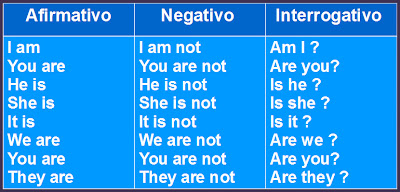
If you want to read more about the verb clik here.
Now, let's practise:
1 http://www.englishexercises.org/makeagame/viewgame.asp?id=3053
2 http://www.englishexercises.org/makeagame/viewgame.asp?id=8298
3 http://www.englishexercises.org/makeagame/viewgame.asp?id=8301
4 http://www.englishexercises.org/makeagame/viewgame.asp?id=8262
5 https://es.liveworksheets.com/tz17515ip
6 http://www.englishexercises.org/makeagame/viewgame.asp?id=10678
7 https://es.liveworksheets.com/il387765lp
8 https://es.liveworksheets.com/xq1477859xg

If you want to read more about the verb clik here.
Now, let's practise:
1 http://www.englishexercises.org/makeagame/viewgame.asp?id=3053
2 http://www.englishexercises.org/makeagame/viewgame.asp?id=8298
3 http://www.englishexercises.org/makeagame/viewgame.asp?id=8301
4 http://www.englishexercises.org/makeagame/viewgame.asp?id=8262
5 https://es.liveworksheets.com/tz17515ip
6 http://www.englishexercises.org/makeagame/viewgame.asp?id=10678
7 https://es.liveworksheets.com/il387765lp
8 https://es.liveworksheets.com/xq1477859xg

Hello everyone
Hello,
My name is Begoña Barahona and I am an English techer.
I have created this blog to help my students learnig English.
Enjoy it
Jobs and occupations
https://es.liveworksheets.com/di78506un
https://es.liveworksheets.com/tm1468416ym
https://es.liveworksheets.com/hb1202649ic
https://es.liveworksheets.com/rf1208687ta
https://es.liveworksheets.com/lj1835808rr
https://es.liveworksheets.com/td1733755fb
https://es.liveworksheets.com/ne1624499zx
https://www.gamestolearnenglish.com/jobs/
https://www.eslgamesplus.com/jobs-places/
https://games4esl.com/esl-classroom-games/jobs-and-occupations-vocabulary/
https://games4esl.com/esl-classroom-games/what-am-i-quiz-jobs-and-occupations-vocabulary/
The time
https://www.gamestolearnenglish.com/telling-the-time/
https://learnenglishkids.britishcouncil.org/word-games/time
https://www.mes-games.com/whattime.php
https://www.helpfulgames.com/subjects/mathematics/tell-time.html
https://games4esl.com/quiz/time-quiz/
https://www.eslkidsgames.com/learn-to-tell-the-time
https://es.liveworksheets.com/vu1553175jy
https://es.liveworksheets.com/vq61471hy
FOR-SINCE
For
“For” indica duración o un período de tiempo, así se puede traducir como “durante” en español. No se puede utilizar como “todo”, en el sentido de “todo el día” o “todo el tiempo”. Podemos utilizar "for*" con todos los tiempos verbales.*
one minute (un minuto), a few hours (unas horas),
two weeks (dos semanas), five months (cinco meses),
12 years (12 años), a long time (mucho tiempo)…
two weeks (dos semanas), five months (cinco meses),
12 years (12 años), a long time (mucho tiempo)…
Since
“Since” se utiliza para indicar el principio de un período de tiempo que sigue al presente. Como tal, puede ser traducido como “desde” en español y se usa como un punto de tiempo específico en el pasado. Como este período de tiempo sigue al presente, solemos utilizar "since*" con los tiempos perfectos.*
10 o’clock (a las 10 en punto), Monday (lunes), March (marzo),
2005, this morning (esta mañana),
the beginning of the year (al principio del año), you called (llamaste)…
2005, this morning (esta mañana),
the beginning of the year (al principio del año), you called (llamaste)…
https://es.liveworksheets.com/iv2371981vo
https://es.liveworksheets.com/vr2397413kt
https://es.liveworksheets.com/la18568yq
https://es.liveworksheets.com/xu1608613zk
https://es.liveworksheets.com/av6927au
https://es.liveworksheets.com/ht27257ng
https://es.liveworksheets.com/zp1851838tl
GOING TO
https://agendaweb.org/exercises/verbs/future/going-to-forms
https://agendaweb.org/exercises/verbs/going-to
https://agendaweb.org/exercises/verbs/going-to-match
https://agendaweb.org/exercises/verbs/going-to-write
https://agendaweb.org/exercises/verbs/going-to-write-2
https://agendaweb.org/exercises/verbs/future/going-to-interrogative-forms
https://agendaweb.org/exercises/verbs/future/going-to-negative-forms
https://wordwall.net/es/resource/2500341/future-forms
https://www.eslgamesplus.com/future-forms-review-spin/
https://www.englishclub.com/esl-games/grammar/jumbled-future-going-to-1.htm
HAVE/HAS TO- DON'T/DOESN'T HAVE TO
HAVE TO IMPLIES AN OBLIGATION
1. https://agendaweb.org/exercises/verbs/modals/have-to
2. https://www.englisch-hilfen.de/en/exercises/tenses/have_to.htm
3. https://es.liveworksheets.com/yt33274sz
4. https://www.englishexercises.org/makeagame/viewgame.asp?id=12171
5.https://learnenglishkids.britishcouncil.org/grammar-practice/have-got
7. https://www.elt-els.com/2015/02/modal-verbs-multiple-choice-test_15.html
8.https://www.englishclub.com/grammar/verbs-modals-have-to-must-not-quiz.htm
Simple Future

https://www.gamestolearnenglish.com/future-tense-game/
https://learnenglishkids.britishcouncil.org/grammar-practice/will-future-predictions
https://www.englishclub.com/esl-games/grammar/jumbled-tenses-future-simple-1.htm
https://www.englishclub.com/grammar/verb-tenses_future-simple-quiz.htm
http://www.learnenglish-online.com/grammar/tests/simplefuture.html
https://www.elt-els.com/2014/04/will-future-forms-online-multiple.html
WH- QUESTIONS
http://www.learnenglish-online.com/grammar/tests/whquestions.html
https://www.englishclub.com/vocabulary/wh-question-words-quiz.php
https://www.helpfulgames.com/subjects/english/365-wh-questions.html
https://www.eslgamesplus.com/question-words-what-where-who-why-when-which-how-grammar-activity/
https://www.gamestolearnenglish.com/questions/
https://www.grammar.cl/Games/Question_Words.htm
https://es.liveworksheets.com/hl497xh
REPORTED SPEECH
Watch the videos, the first one is an explanation and the second one is to practice.
Now, do the exercises and games:
1. https://www.learnenglishfeelgood.com/reported-speech-mixed1.html
2. http://esl.fis.edu/grammar/multi/repspee.htm
3. https://www.usingenglish.com/quizzes/102.html
4. https://www.learn-english-today.com/lessons/lesson_contents/exercises/reported-speech_online-quiz1.html
5. https://www.englisch-hilfen.de/en/exercises/reported_speech/backshift.htm
6. https://www.englishexercises.org/makeagame/viewgame.asp?id=1629
7. http://a4esl.org/q/h/9901/tm-reported1.html
8. https://www.englisch-hilfen.de/en/exercises/reported_speech/pronouns.htm
9. https://www.examenglish.com/grammar/B1_reported_speech.htm
10. https://www.turacogames.com/games/reported-speech-grammar-game-for-esl/
11. http://www.engames.eu/reported-speech/
12. https://jeopardylabs.com/play/reported-speech-game2
The passive voice
1. https://www.englisch-hilfen.de/en/complex_tests/passive1/index.php
2. https://www.englisch-hilfen.de/en/exercises/active_passive/active_or_passive.htm
3. https://www.englisch-hilfen.de/en/exercises/active_passive/questions.htm
4. https://www.english-grammar.at/online_exercises/passive-voice/pa014.htm
5. https://www.english-grammar.at/online_exercises/passive-voice/pa013-passive-active.htm
6. https://www.english-grammar.at/online_exercises/passive-voice/pa003-history-of-paper.htm
7. https://multimedia-english.com/activities/free/passive-voice-737
8. https://agendaweb.org/exercises/verbs/passive-1
9. http://static.digischool.nl/en/grammar/hotpot/passive/tegenverltijd.htm
10. http://www.eslgamesplus.com/passive-voice-past-passive-esl-grammar-sentence-activity-fun-game-online/
11. https://www.englishmedialab.com/GrammarGames/football/passive%20voice/passive%20voice.html
12. http://www.eslgamesworld.com/members/games/grammar/basketball/active%20vs.%20passive%20voice/active%20vs.%20passive%20voice.html
13. https://www.turacogames.com/games/passive-voice-grammar-game-for-esl/
14. https://www.mes-games.com/passive1.php
MODAL VERBS
Look first at this presentation where some modals are explained
https://www.slideshare.net/aponce4/modal-verbs-presentation-929329
1. http://s.mound.free.fr/skyblues67/modals/schoollife.htm
2. https://www.english-grammar.at/online_exercises/modal-verbs/m012-must-mustnt.htm
3. https://www.english-grammar.at/online_exercises/modal-verbs/m005-must-mustnt-neednt.htm
4. https://www.english-grammar.at/online_exercises/modal-verbs/m004-must-cant.htm
5. https://learnenglishteens.britishcouncil.org/grammar/beginner-grammar/have-must-should-obligation-advice
6. http://www.eslgamesworld.com/members/games/grammar/New_Snakes_%20Ladders/Mixed_Modals.html
7. http://www.eslgamesworld.com/members/games/grammar/basketball/modals%20can%20must%20would/modals%20can%20must%20would.html
8. https://www.eslgamesplus.com/modal-verbs-can-could-might-must-should-would-catapult/
9. https://www.englishmedialab.com/GrammarGames/basketball/modals%20can%20must%20would/modals%20can%20must%20would.html
10. https://www.englishmedialab.com/GrammarGames/New_Snakes_%20Ladders/Mixed_Modals.html
11. http://eslpuzzles.com/Grammar%20Games/Modal%20Verb%20Games/Modal%20Verbs%20Football%20Grammar%20Game.html
12. https://www.eslkidsworld.com/Interactive%20games/Grammar%20Games/Modal%20Verbs/advice%20using%20should%20and%20shouldnt.html
13. https://kidseslgames.com/grammar%20games/Modal%20Verbs/modalverbs2.html
And at last, here you can find lots of games to practice every modal separatedly
https://www.englishclub.com/esl-games/grammar/jumbled-modals.htm
https://www.slideshare.net/aponce4/modal-verbs-presentation-929329
1. http://s.mound.free.fr/skyblues67/modals/schoollife.htm
2. https://www.english-grammar.at/online_exercises/modal-verbs/m012-must-mustnt.htm
3. https://www.english-grammar.at/online_exercises/modal-verbs/m005-must-mustnt-neednt.htm
4. https://www.english-grammar.at/online_exercises/modal-verbs/m004-must-cant.htm
5. https://learnenglishteens.britishcouncil.org/grammar/beginner-grammar/have-must-should-obligation-advice
6. http://www.eslgamesworld.com/members/games/grammar/New_Snakes_%20Ladders/Mixed_Modals.html
7. http://www.eslgamesworld.com/members/games/grammar/basketball/modals%20can%20must%20would/modals%20can%20must%20would.html
8. https://www.eslgamesplus.com/modal-verbs-can-could-might-must-should-would-catapult/
9. https://www.englishmedialab.com/GrammarGames/basketball/modals%20can%20must%20would/modals%20can%20must%20would.html
10. https://www.englishmedialab.com/GrammarGames/New_Snakes_%20Ladders/Mixed_Modals.html
11. http://eslpuzzles.com/Grammar%20Games/Modal%20Verb%20Games/Modal%20Verbs%20Football%20Grammar%20Game.html
12. https://www.eslkidsworld.com/Interactive%20games/Grammar%20Games/Modal%20Verbs/advice%20using%20should%20and%20shouldnt.html
13. https://kidseslgames.com/grammar%20games/Modal%20Verbs/modalverbs2.html
And at last, here you can find lots of games to practice every modal separatedly
https://www.englishclub.com/esl-games/grammar/jumbled-modals.htm
TOO AND ENOUGH
1. https://www.usingenglish.com/quizzes/239.html
2. https://www.grammar.cl/Games/Very_Too_Enough.htm
3. https://www.usingenglish.com/quizzes/53.html
4. https://www.usingenglish.com/quizzes/127.html
5. http://www.autoenglish.org/gr.too.i.htm
6. http://baladre.info/english/sedaviwebfront/tooenoughmuch.htm
7. http://baladre.info/english/sedaviwebfront/tooenough.htm
8. https://www.montsemorales.com/gramatica/Tooenough.htm
9. https://www.myenglishpages.com/site_php_files/grammar-exercise-too-enough.php
10. http://baladre.info/english/sedaviwebfront/tooenoughmuch2.htm
PRESENT PERFECT
Sujeto | Verbo auxiliar | Forma Corta | Participio Pasado |
I, you, we, they | have | I’ve, you’ve, we’ve, they’ve | talked, learned, traveled… |
he, she, it | has | he’s, she’s, it’s | talked, learned, traveled… |
1. https://agendaweb.org/exercises/verbs/present-perfect
2. https://agendaweb.org/exercises/verbs/present-perfect-2
3. https://agendaweb.org/exercises/verbs/present-perfect-multiple
4. https://www.english-at-home.com/grammar-present-perfect/
5. https://www.curso-ingles.com/practicar/ejercicios/present-perfect-vs-past-simple
6. https://www.curso-ingles.com/practicar/ejercicios/present-perfect-vs-past-simple-2
7. https://web2.uvcs.uvic.ca/courses/elc/studyzone/330/grammar/upperf2.htm
8. http://www.adelescorner.org/grammar/pres_perfect/pres_per_vs_past_simple.html
9. https://www.learnclick.com/mchoice/show/878
10. https://www.englishlab.net/hp/quiz18_past_simple_present_perfect_1.htm
11. https://web2.uvcs.uvic.ca/courses/elc/studyzone/330/grammar/upperf2.htm
12. https://web2.uvcs.uvic.ca/courses/elc/studyzone/410/grammar/ppvpast1.htm
13. https://www.englisch-hilfen.de/en/exercises/tenses/simple_past_present_perfect.htm
14. https://www.ecenglish.com/learnenglish/lessons/present-perfect-quiz
15. https://www.eslgamesplus.com/present-perfect-vs-past-tenses-rally/
16. https://eslkidsworld.com/Interactive%20games/Grammar%20Games/Present%20Perfect/present%20perfect%20quiz.html
Irregular Verbs
http://www.eslgamesworld.com/members/games/ClassroomGames/Quizshow/Irregular%20Past%20Simple%20Quiz%20Show/index.html
https://www.quia.com/cb/8111.html
https://www.perfect-english-grammar.com/irregular-verbs-exercise-2.html
https://www.eslgamesplus.com/irregular-verbs-interactive-hangman-game-for-esl-grammar/
https://www.quia.com/cb/8111.html
https://www.perfect-english-grammar.com/irregular-verbs-exercise-2.html
https://www.eslgamesplus.com/irregular-verbs-interactive-hangman-game-for-esl-grammar/
VERB + -ING/TO
Watch the video and do the exercises, you can check a list of the verbs followed by gerund or infinitive here
2. http://www.eslgamesworld.com/members/games/grammar/En%20garde/gerunds%20infinitive/gerunds%20or%20infinitive.html
3. https://elt.oup.com/student/solutions/preint/grammar/grammar_01_022e?cc=global&selLanguage=en
4. https://www.perfect-english-grammar.com/gerunds-and-infinitives-exercise-1.html
Past Continuous
FORMING THE PAST CONTINUOUS
Subject
|
was/were
|
base + ing
|
They
|
were
|
watching
|
Affirmative
| ||
She
|
was
|
reading
|
Negative
| ||
She
|
wasn't
|
reading
|
Interrogative
| ||
Was
|
she
|
reading?
|
Interrogative negative
| ||
Wasn't
|
she
|
reading?
|
The past continuous of any verb is composed of two parts : the past tense of the verb "to be" (was/were), and the base of the main verb +ing.
USES OF THE PAST CONTINUOUS
We use the past continuous to talk about the past:
- for something which happened before and after another action:
The children were doing their homework when I got home.
Compare: The children did their homework when (= after) I got home.
This use of the past continuous is very common at the beginning of a story:
The other day I was waiting for a bus when …
Last week, as I was driving to work, …
- for something that happened before and after a specific time:
It was eight o'clock. I was writing a letter.
Compare: At eight o'clock I wrote (= started writing) some letters.
- to show that something continued for some time:
My head was aching.
Everyone was shouting.
- for something that happened again and again:
I was practising every day, three times a day.
They were meeting secretly after school.
They were always quarrelling.
- with verbs which show change or growth:
The children were growing up quickly.
Her English was improving.
My hair was going grey.
The town was changing quickly.
Do the following exercises
Writing
1. Go into this link: https://writeandimprove.com/
2. Chhose your level: begginer
3. Choose the topic
4. Start writing
2. Chhose your level: begginer
3. Choose the topic
4. Start writing
Subscribe to:
Posts (Atom)